Mission-led configuration
Mobility, sensing, communications, control, documentation, and support are aligned with the operating task and acceptance plan.
Mission-configured robotic systems for teams operating around fire, floodwater, submerged structures, and hazardous access.
Mission before platform.
Evidence before performance claims.
Acceptance before delivery.
Effective emergency systems begin with the environment, hazard, information gap, operator workflow, and required intervention. The machine follows the mission.
Our portfolio connects observation, response, drainage, and command into a coordinated architecture for technical buyers, integrators, and professional distributors.
Mobility, sensing, communications, control, documentation, and support are aligned with the operating task and acceptance plan.
Performance and compliance statements are tied to current technical documents, ordered options, and representative verification.
Air, surface, underwater, ground, drainage, and command workflows are considered as connected operational roles.
Private-label requirements, training, inspection, spares, and after-sales responsibilities are structured before delivery.
Configure the platform, sensing, communications, control, documentation, and support around the operating requirement.
A mission-led aerial system for rapid flood-area observation, visual and thermal information collection, map annotation, and traceable incident records.
View systemA remotely supervised surface system for floodwater route observation, sensing, and delivery of lightweight emergency or communication payloads.
View systemA remotely operated underwater system for visual search, target observation, and inspection records around submerged infrastructure.
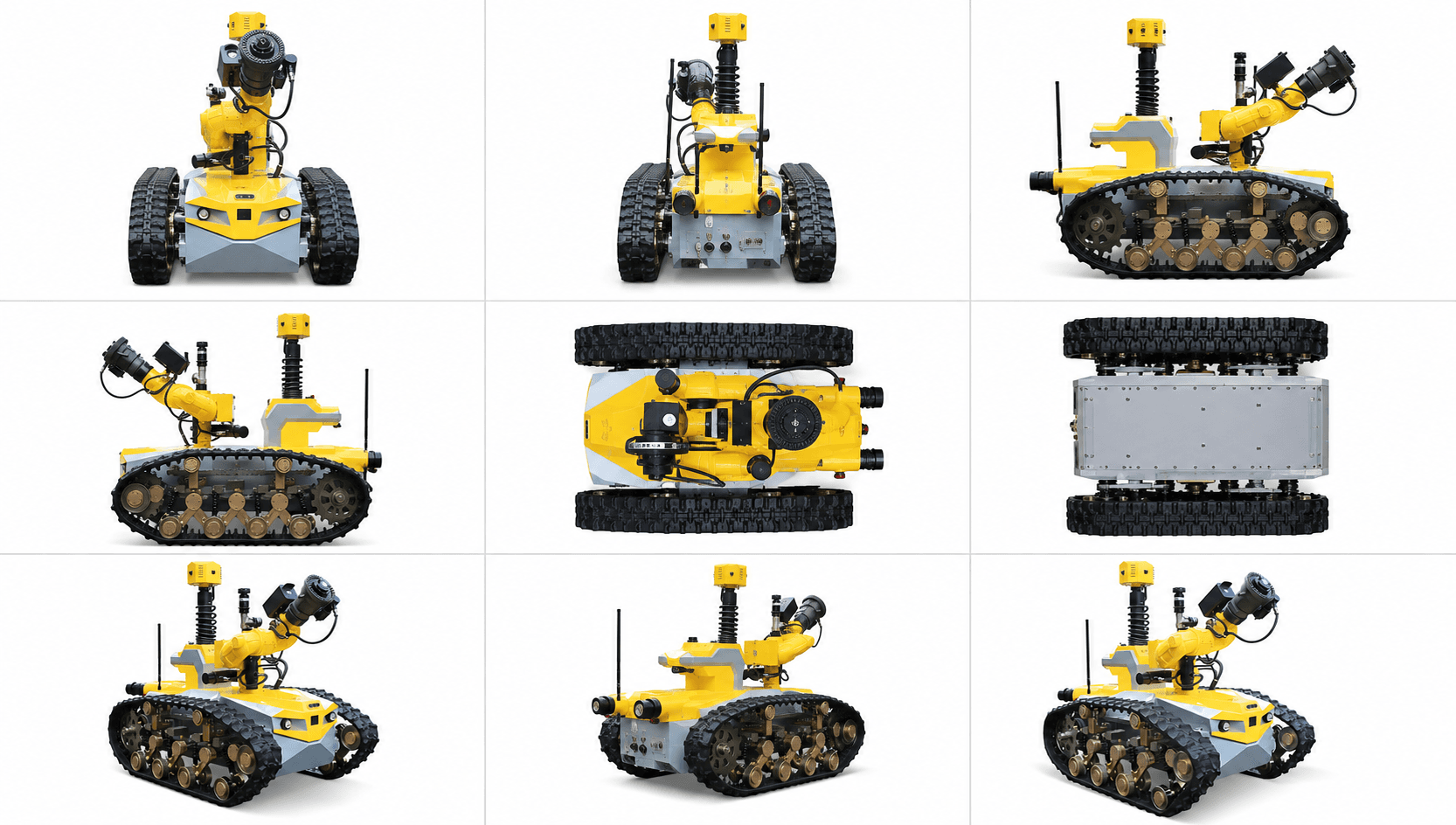
View systemA tracked remote system for hazardous-area observation and a configurable interface for compliant suppression equipment.
View systemA remotely deployed drainage system for moving accumulated water from urban floods, tunnels, and below-ground emergency sites.
View systemA shared command layer for location, video, status, missions, alerts, asset records, and traceable incident evidence.
View systemSelect the operating problem first, then define the combination of mobility, sensing, intervention, command, and evidence needed.
Build situational awareness across air and water, extend observation reach, support lightweight delivery, and coordinate evidence for incident teams.
Explore applicationSupport remote scene observation and intervention planning where heat, smoke, toxic exposure, or restricted access can increase responder risk.
Explore applicationObserve submerged targets and record visible conditions around bridge piers, gates, pipes, levees, and other water infrastructure.
Explore applicationMove drainage capacity toward accumulated water in urban floods, tunnels, garages, and below-ground spaces while improving operational visibility.
Explore applicationConfigure remote systems for information gathering and supervised intervention around complex industrial sites and hazardous access routes.
Explore applicationEnvironment · task · hazards
Platform · payload · control
Documents · tests · acceptance
Inspection · training · spares
Service · records · improvement
Certification and performance requirements vary by market, application, and ordered configuration. The technical basis is reviewed before commitments are made.
Selection begins with the mission, operating environment, hazards, access route, required information or intervention, operator workflow, and acceptance criteria. Platform and payload choices follow that review.
No. Mobility, sensing, communications, environmental protection, interfaces, documentation, and support can vary by configuration. The quotation identifies the applicable technical basis for the proposed system.
OEM, ODM, and private-label requirements can be reviewed for suitable projects. Scope depends on engineering changes, order planning, documentation, territory, training, service capability, and lifecycle responsibilities.
Buyers should request current technical data, drawings, available certificates, test evidence, compatibility information, operation and maintenance documents, service terms, and mission-relevant acceptance criteria.
Share the operating environment, required task, hazards, documentation, quantity, and acceptance plan for a structured configuration review.
Prepare an enquiry